Best Psychiatrist in Bhopal – Common Mental Health Conditions and Their Treatment
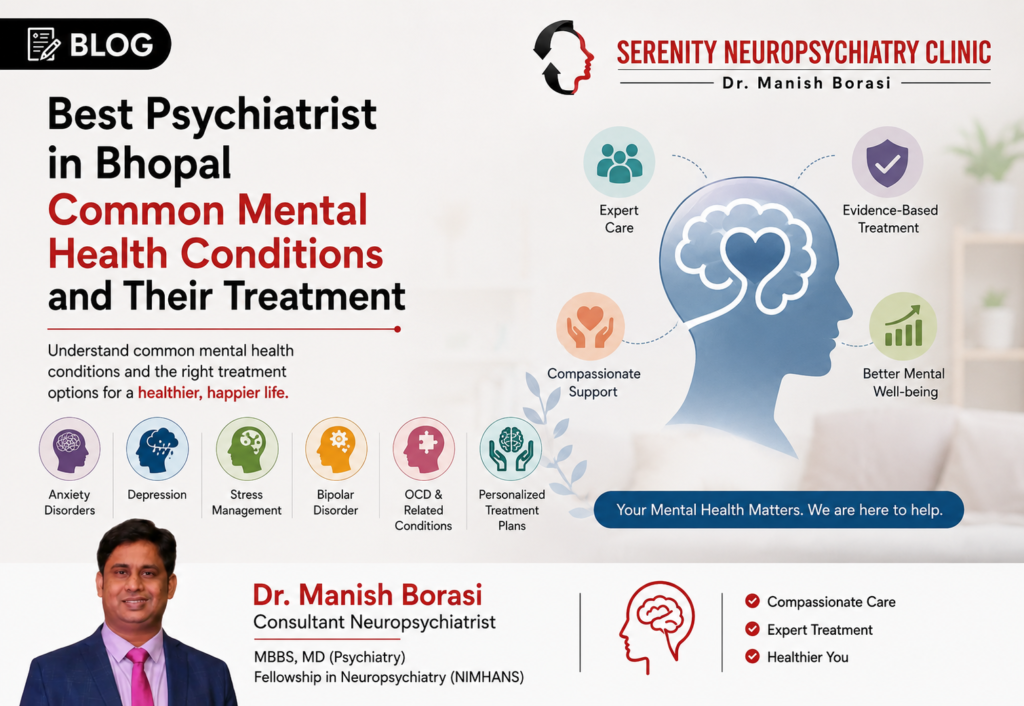
Mental health plays an important role in overall well-being. Stress, anxiety, low mood, sleep problems, emotional difficulties, relationship concerns, and other psychological symptoms can affect daily life, work, family relationships, and physical health. Getting professional help at the right time can make it easier to understand these concerns and choose an appropriate treatment approach. Finding the Best Psychiatrist in Bhopal can be an important step for people experiencing persistent emotional, behavioral, or psychological difficulties. A psychiatrist can assess symptoms, identify possible mental health conditions, and recommend treatment according to the individual’s needs. At Serenity Neuropsychiatry Clinic, mental healthcare focuses on confidentiality, compassion, accurate assessment, and personalized treatment. The clinic is led by Dr. Manish Borasi, an experienced psychiatrist and psychotherapist with more than 14 years of clinical experience. About Dr. Manish Borasi – Best Psychiatrist in Bhopal Dr. Manish Borasi is a highly experienced psychiatrist and psychotherapist dedicated to improving mental health outcomes. He has more than 14 years of clinical experience and follows a patient-focused approach to psychiatric care. Dr. Borasi completed his MBBS from Mahatma Gandhi Institute of Medical Sciences, Sewagram, and pursued his MD in Psychiatry from IHBAS, Delhi, one of India’s recognized neuropsychiatric institutes. As a Best Psychiatrist in Bhopal, Dr. Manish Borasi focuses on understanding each patient’s concerns before developing a suitable treatment plan. His approach combines clinical assessment, modern diagnostic techniques, psychotherapy, and evidence-based psychiatric treatment whenever appropriate. He believes that mental health concerns should be addressed without judgment and that patients should feel comfortable discussing their symptoms, concerns, emotions, and personal experiences. Understanding Mental Health Conditions Mental health conditions can affect people of different ages and backgrounds. Symptoms may appear gradually or develop suddenly following stressful events, medical problems, changes in lifestyle, or other circumstances. Some common mental health concerns include: Anxiety disorders Depression Stress-related problems Panic attacks Sleep disorders Mood disorders Obsessive-compulsive disorder Phobias Relationship and emotional difficulties Behavioral concerns Addiction-related problems Sexual and relationship concerns A Psychiatrist in Bhopal can evaluate the symptoms, understand their severity, and determine whether psychiatric treatment, psychotherapy, lifestyle changes, medication, or a combination of approaches may be appropriate. Common Mental Health Conditions and Their Symptoms 1. Anxiety Disorders Anxiety is a normal emotional response to stressful situations. However, when excessive worry, fear, nervousness, or physical symptoms continue for a long time and interfere with everyday life, professional evaluation may be helpful. Common symptoms can include: Excessive worrying Restlessness Difficulty concentrating Irritability Fast heartbeat Sweating Sleep difficulties Feeling constantly tense Anxiety Treatment in Bhopal may involve psychotherapy, lifestyle modifications, relaxation strategies, and medication when clinically appropriate. The treatment plan depends on the type and severity of anxiety and the individual’s overall health. 2. Depression Depression is more than temporary sadness. It can affect mood, motivation, sleep, appetite, concentration, energy, and interest in previously enjoyable activities. Possible symptoms include: Persistent sadness Loss of interest Low energy Changes in sleep Changes in appetite Difficulty concentrating Feelings of hopelessness Social withdrawal Reduced motivation Depression Treatment in Bhopal may involve psychotherapy, medication, lifestyle support, or a combination of treatments depending on the person’s symptoms and clinical assessment. If symptoms persist or interfere significantly with everyday functioning, consulting a mental health professional is important. 3. Stress and Emotional Difficulties Stress can develop because of work pressure, family concerns, financial difficulties, relationship problems, academic responsibilities, major life changes, or other circumstances. Short-term stress is common, but prolonged stress may affect sleep, concentration, mood, physical health, and relationships. A Mental Health Doctor in Bhopal can help patients understand unhealthy stress patterns and develop strategies to manage emotional difficulties. Treatment may include counseling, psychotherapy, relaxation techniques, lifestyle changes, and other interventions based on individual needs. 4. Panic Attacks Panic attacks are sudden episodes of intense fear or discomfort that may occur unexpectedly. Symptoms can include: Rapid heartbeat Chest discomfort Sweating Trembling Shortness of breath Dizziness Fear of losing control Sudden feeling of danger Repeated panic attacks may lead people to avoid certain places or situations. Professional assessment can help determine whether panic disorder or another condition may be involved. 5. Sleep Disorders Sleep and mental health are closely connected. Persistent difficulty falling asleep, staying asleep, waking too early, or excessive daytime sleepiness can affect mood and concentration. Sleep problems may occur alongside anxiety, depression, stress, substance use, medical conditions, or changes in daily routine. A Psychiatrist in Bhopal can assess whether psychological or psychiatric factors are contributing to persistent sleep difficulties and recommend an appropriate treatment plan. 6. Obsessive-Compulsive Disorder Obsessive-compulsive disorder (OCD) involves recurring unwanted thoughts, images, or urges and repetitive behaviors or mental acts performed in response to these thoughts. Examples may include: Repeated checking Excessive cleaning Repeated hand washing Fear of contamination Reassurance seeking Repetitive counting Intrusive thoughts OCD can significantly interfere with daily activities and relationships. Professional treatment can help people manage symptoms and improve functioning. 7. Mood Disorders Mood disorders can cause significant changes in emotional state, energy, behavior, sleep, and daily functioning. Depending on the condition, a person may experience periods of persistent low mood, unusually elevated or irritable mood, changes in activity levels, or significant fluctuations in energy. A Best Psychiatrist in Bhopal can assess mood symptoms, medical history, behavioral changes, and other relevant factors before recommending treatment. Diagnosis of Mental Health Conditions Psychiatric diagnosis is generally based on detailed clinical assessment rather than a single laboratory test. During a consultation, the psychiatrist may discuss: Current symptoms Duration of symptoms Previous mental health history Medical conditions Medication history Sleep patterns Lifestyle Family history Work and relationship concerns Substance use, when relevant The doctor may also use standardized psychological or psychiatric assessment tools when appropriate. Accurate diagnosis helps create an individualized treatment plan. Psychiatric Treatment in Bhopal Psychiatric Treatment in Bhopal may involve one or more approaches depending on the condition and individual circumstances. Psychotherapy Psychotherapy involves structured conversations with a trained mental health professional to understand thoughts, emotions, behaviors, and coping patterns. It may help with: Anxiety Depression Stress Relationship difficulties Emotional problems Behavioral concerns Certain trauma-related
Best Psychiatrist in Bhopal – Common Mental Health Conditions and Their Treatment Read More »