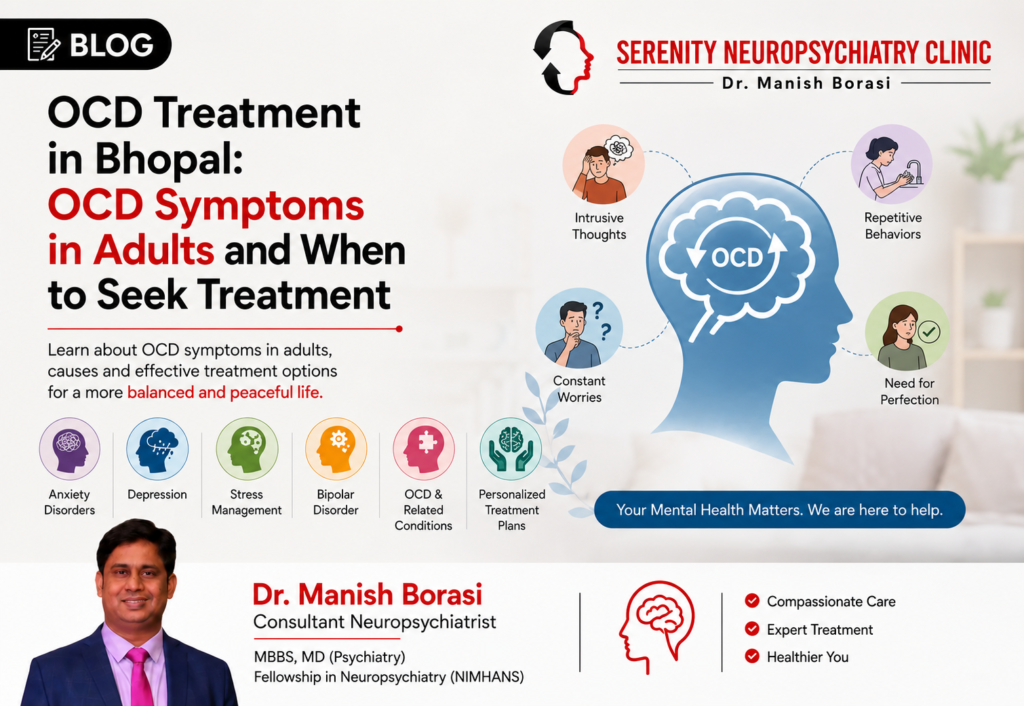
OCD Treatment in Bhopal: OCD Symptoms in Adults and When to Seek Treatment
Obsessive-compulsive disorder (OCD) is a mental health condition that can affect thoughts, emotions, daily routines, relationships, and professional responsibilities. Adults experiencing OCD may have repeated unwanted thoughts, doubts, fears, or urges that cause distress. To reduce this distress, they may feel compelled to perform certain actions or repeat mental rituals.Seeking OCD Treatment in Bhopal can help adults understand their symptoms and explore appropriate treatment options. A qualified mental health professional can assess the nature of the thoughts and behaviors and recommend a treatment plan based on individual needs. Recognizing OCD Symptoms in Adults is an important step toward understanding the condition and seeking appropriate professional support. Some people repeatedly check locks, wash their hands, arrange objects in a particular order, or seek reassurance because they feel unable to ignore their concerns. These behaviors can consume considerable time and interfere with everyday activities. OCD is more than being organized, careful, or particular about cleanliness. It can involve distressing thoughts and repetitive behaviors that are difficult to control. Evidence-based treatment can help many people manage their symptoms and improve their quality of life. About Dr. Manish Borasi – Serenity Neuropsychiatry Clinic Welcome to Serenity Neuropsychiatry Clinic, a center for advanced psychiatric care and emotional wellness in Bhopal. Our clinic is dedicated to providing compassionate, confidential, and evidence-based treatment for individuals facing mental health challenges. We understand that mental health is deeply personal. That is why we focus on creating a safe, supportive, and non-judgmental environment where patients feel comfortable sharing their concerns and receiving appropriate guidance. At our clinic, we believe that every individual is unique, and so are their challenges. We follow a personalized treatment approach, combining clinical expertise with modern diagnostic techniques to support accurate assessment and appropriate care. Our goal is not just to address symptoms but also to understand the factors contributing to mental health difficulties. Led by Dr. Manish Borasi, a psychiatrist and psychotherapist with more than 14 years of clinical experience, our clinic emphasizes patient-focused care, confidentiality, and individualized treatment planning. What Is Obsessive Compulsive Disorder? Obsessive Compulsive Disorder is a mental health condition characterized by obsessions, compulsions, or both. Obsessions are recurring and unwanted thoughts, images, doubts, or urges that cause anxiety or distress. Compulsions are repetitive behaviors or mental acts that a person feels driven to perform to reduce that distress. For example, an adult may repeatedly check a door because of a fear that it has not been locked properly. Another person may wash their hands excessively because of concerns about contamination. Some individuals repeat words mentally, count, or seek reassurance to feel temporarily relieved. These behaviors may provide short-term relief, but anxiety and doubts can return. Over time, the cycle may interfere with everyday responsibilities, relationships, and emotional well-being. Understanding Obsessive Compulsive Disorder is important because it is not simply a preference for cleanliness or organization. It is a recognized mental health condition that may require professional assessment and treatment. Common OCD Symptoms in Adults The presentation of OCD varies from person to person. Recognizing OCD Symptoms in Adults can help individuals identify patterns that deserve professional attention. 1. Repeated Intrusive Thoughts Intrusive thoughts are unwanted thoughts, images, or urges that repeatedly enter a person’s mind. They may involve contamination, mistakes, harm, responsibility, or other distressing subjects. Adults experiencing these thoughts may try to suppress them, mentally review situations, or repeatedly seek reassurance. Having an unwanted thought does not mean that a person wants it to happen or intends to act on it. When intrusive thoughts become persistent and interfere with everyday life, professional evaluation can help clarify their nature. 2. Excessive Cleaning and Hand Washing Some individuals experience intense fears about germs, contamination, or spreading harmful substances. They may wash their hands repeatedly, clean objects excessively, or avoid places they believe are contaminated. Normal hygiene differs from compulsive cleaning. The behavior may be concerning when it becomes difficult to control, causes physical irritation, or disrupts work and social activities. 3. Repeated Checking Behaviors Repeated checking may involve door locks, electrical switches, appliances, documents, messages, or completed tasks. Even after checking something several times, the individual may continue to doubt whether it was done correctly. This pattern can cause delays, reduce productivity, and increase distress. A clinical assessment can help determine whether the behavior is related to OCD or another concern. 4. Ordering and Symmetry Concerns Some adults feel intense discomfort when objects appear uneven or arrangements seem incomplete. They may repeatedly organize items, adjust objects, or repeat actions until everything feels right. Being organized does not automatically indicate OCD. The important distinction is whether these behaviors cause significant distress and interfere with normal functioning. 5. Reassurance Seeking Adults with OCD may repeatedly ask family members or colleagues whether something is safe, correct, or acceptable. They may review past events or mentally replay conversations because they fear making a mistake. Reassurance may provide temporary relief, but the same doubts can return and restart the cycle. 6. Mental Compulsions Not all compulsions involve visible actions. Some people repeat phrases silently, count mentally, review memories, or perform other mental rituals to reduce anxiety. Because these actions happen internally, family members may not recognize them. Nevertheless, mental rituals can be exhausting and time-consuming. When Should You Seek OCD Treatment in Bhopal? Occasional doubts and repeated checks are common experiences. Professional help becomes important when these patterns are persistent, distressing, difficult to resist, or disruptive to everyday functioning. Consider seeking an assessment if you experience: Repeated unwanted thoughts that cause significant distress. Compulsive checking, cleaning, counting, or arranging. Rituals that consume considerable time each day. Difficulty completing work or household responsibilities. Avoidance of situations because of intrusive thoughts. Repeated requests for reassurance. Sleep difficulties related to obsessive thoughts or rituals. Relationship problems associated with repetitive behaviors. Increasing anxiety or frustration related to symptoms. OCD Treatment in Bhopal can help individuals understand their symptoms and explore suitable treatment options before these patterns become more disruptive. A Psychiatrist in Bhopal can assess symptoms, discuss their effect on
OCD Treatment in Bhopal: OCD Symptoms in Adults and When to Seek Treatment Read More »