
neuropsychiatry.co.in

Emotional Wellbeing

Depression vs Normal Sadness: How to Know When You Need Professional Help

Everyone feels sad from time to time. Losing a loved one, facing relationship problems, work stress, financial difficulties, or life disappointments can all cause sadness. In most cases, these emotions gradually improve with time and support from family or friends. However, when sadness becomes intense, lasts for weeks, and starts affecting daily life, it may be a sign of Depression Treatment in Bhopal rather than normal sadness. Many people confuse depression with temporary emotional lows, delaying professional care. Understanding the difference between depression vs normal sadness can help individuals recognize early warning signs and seek timely treatment before symptoms become more severe. In this blog, we explain the key differences between normal sadness and depression, common symptoms, causes, diagnosis, treatment options, and when it is time to consult the Best Psychiatrist in Bhopal for professional help. What is Normal Sadness? Normal sadness is a natural emotional response to life’s difficult situations. Everyone experiences sadness after stressful events such as losing a job, facing academic pressure, experiencing relationship issues, or grieving the loss of someone close. Although these feelings can be painful, they usually improve within a few days or weeks as circumstances change or emotional healing begins. People experiencing normal sadness can still enjoy positive moments, continue their daily activities, and gradually return to their usual routine without requiring medical treatment. Unlike clinical depression, normal sadness does not significantly interfere with work, relationships, sleep, appetite, or overall quality of life. What is Depression? Depression is a medical condition that affects a person’s emotions, thinking patterns, physical health, and daily functioning. It is much more than simply feeling sad. People who require Depression Treatment in Bhopal often experience persistent sadness, hopelessness, loss of motivation, fatigue, sleep disturbances, and difficulty concentrating for two weeks or longer. Without proper treatment, depression can affect relationships, work performance, education, physical health, and emotional well-being. Fortunately, with early diagnosis and appropriate Depression Treatment in Bhopal, most people experience significant improvement and return to a healthy, productive life. Depression vs Normal Sadness: Understanding the Difference Understanding Depression vs Normal Sadness is important because the symptoms may appear similar initially but differ in severity and duration. Normal Sadness Depression Usually linked to a specific life event May occur with or without a clear reason Improves gradually with time Persists for weeks or months Person still enjoys happy moments Loss of interest in almost everything Daily routine continues normally Daily activities become difficult Temporary emotional response Medical condition requiring professional care Self-esteem usually remains normal Feelings of worthlessness or excessive guilt are common Recognizing these differences helps individuals decide when it is time to seek Depression Treatment in Bhopal instead of assuming that the symptoms will simply go away on their own. Early Signs of Depression You Should Never Ignore Many people ignore the early symptoms of depression, believing they are simply stressed or emotionally exhausted. However, early diagnosis often leads to better recovery. Some common warning signs include: Persistent sadness lasting more than two weeks Loss of interest in hobbies or enjoyable activities Constant fatigue or low energy Difficulty concentrating or making decisions Changes in sleep patterns (sleeping too much or too little) Loss of appetite or overeating Feelings of hopelessness or helplessness Increased irritability or anger Social withdrawal from family and friends Frequent crying without an obvious reason If these symptoms continue to interfere with daily life, consulting the Best Psychiatrist in Bhopal is recommended. Common Causes of Depression Several biological, psychological, and environmental factors can contribute to depression. Some common causes include: Stressful Life Events Major life changes such as divorce, financial problems, unemployment, academic pressure, or the loss of a loved one can increase the risk of depression. Family History Individuals with a family history of depression or other mental health disorders may have a higher risk of developing depression. Brain Chemistry Changes in neurotransmitters that regulate mood can contribute to depression and may require medical treatment. Chronic Medical Conditions Long-term illnesses such as diabetes, heart disease, thyroid disorders, chronic pain, or neurological conditions may increase the likelihood of depression. Traumatic Experiences Childhood trauma, abuse, neglect, or significant emotional distress can have long-lasting effects on mental health. Symptoms of Depression That May Need Depression Treatment in Bhopal Depression affects everyone differently. While some people experience persistent sadness, others may notice physical symptoms, emotional changes, or difficulty carrying out daily activities. If these symptoms last for more than two weeks, it may be time to consider Depression Treatment in Bhopal. Common symptoms include: Persistent sadness or low mood Feeling hopeless, helpless, or worthless Loss of interest in hobbies and daily activities Constant tiredness or lack of energy Difficulty concentrating or making decisions Changes in appetite or body weight Sleeping too much or experiencing insomnia Increased irritability or frustration Social withdrawal from family and friends Unexplained physical aches or headaches Thoughts of self-harm or suicide (requires immediate medical attention) Recognizing these symptoms early can help individuals receive timely Depression Treatment in Bhopal and improve their overall quality of life. When Should You Seek Professional Help for Depression? Many people believe they should handle emotional struggles on their own, but professional help is important when symptoms begin affecting everyday life. You should consider consulting the Best Psychiatrist in Bhopal if: Sadness lasts for more than two weeks. Daily work or studies become difficult. Relationships are affected due to emotional changes. You lose interest in activities you once enjoyed. Anxiety, panic attacks, or excessive stress become frequent. Sleep and eating habits change significantly. You experience feelings of hopelessness most days. Thoughts of self-harm or suicide occur. Seeking help early does not mean weakness—it is an important step toward recovery and better mental health. How is Depression Diagnosed? There is no single blood test or scan that confirms depression. Diagnosis is usually based on a detailed clinical evaluation by an experienced mental health professional. During the assessment, the psychiatrist may evaluate: Your emotional and psychological symptoms Duration and severity of symptoms Personal and family medical history Stressful life events

Depression vs Normal Sadness: How to Know When You Need Professional Help Read More »

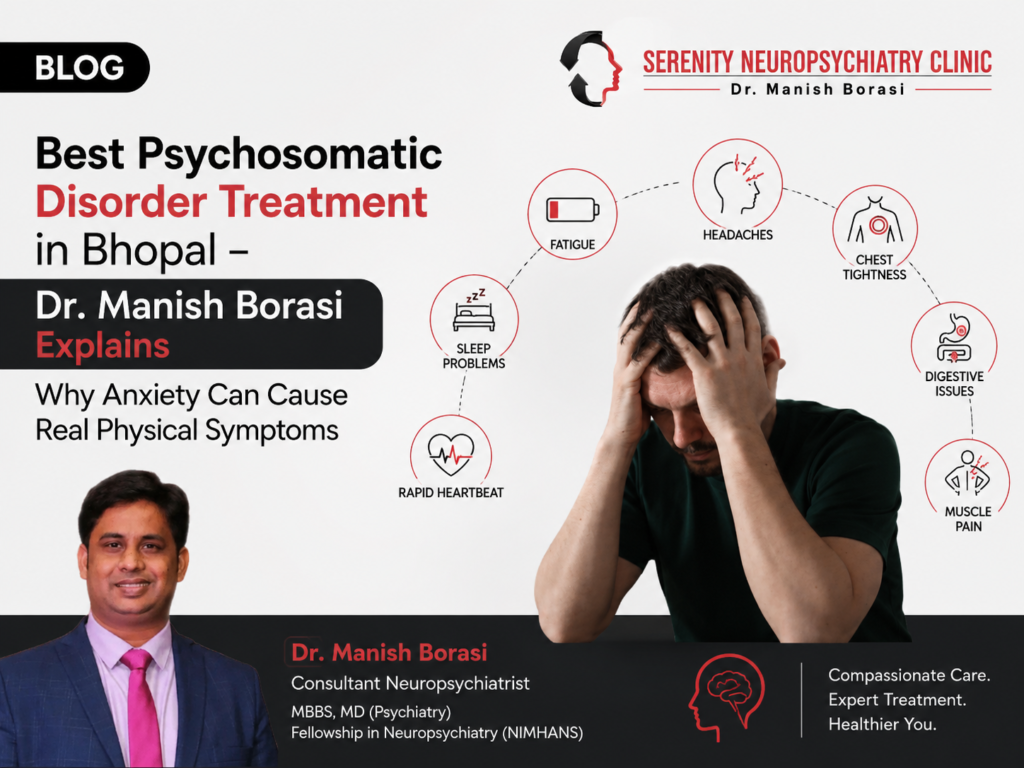
Best Psychosomatic Disorder Treatment in Bhopal – Dr. Manish Borasi Explains Why Anxiety Can Cause Real Physical Symptoms

Best Psychosomatic Disorder Treatment in Bhopal is often sought by patients who have been struggling with unexplained physical symptoms despite multiple medical tests showing normal results. Many individuals experience recurring headaches, stomach discomfort, chest tightness, heart palpitations, dizziness, or body pain and spend months visiting different specialists without finding a clear explanation. Dr. Manish Borasi, a leading Psychiatrist in Bhopal with over 14+ years of clinical experience, frequently treats patients whose symptoms are linked not to a hidden physical disease, but to severe anxiety, chronic stress, or psychosomatic disorders. Patients often say: “All my reports are normal, but I still feel sick.” “My heart starts racing for no reason.” “Doctors say nothing is wrong, but I know something is.” “Can anxiety really cause physical symptoms?” The answer is yes. Anxiety does not only affect thoughts and emotions. It can create genuine physical symptoms that significantly impact daily life. Understanding psychosomatic symptoms can help patients seek the right treatment and finally break the cycle of fear, repeated testing, and ongoing distress. Best Psychiatrist in Bhopal for Psychosomatic Disorders Many people believe that anxiety only causes nervousness or excessive worrying. In reality, anxiety affects the entire body. The brain and body are deeply connected. When stress and anxiety become chronic, the nervous system remains in a constant state of alertness. This can trigger symptoms involving: The heart The stomach The digestive system The muscles The respiratory system Sleep patterns This is why many patients seeking Psychosomatic Disorder Treatment in Bhopal initially consult cardiologists, neurologists, gastroenterologists, or physicians before eventually being referred to a psychiatrist. With over 14+ years of experience, Dr. Manish Borasi helps patients identify the connection between emotional distress and physical symptoms. Dr. Manish Borasi – Psychiatrist in Bhopal with 14+ Years of Experience Mental health conditions often present differently in different individuals. Some patients experience: Excessive worry Panic attacks Fear Sleep disturbances Others primarily experience physical symptoms. These patients may never realize anxiety is the underlying cause. With over 14+ years of clinical experience, Dr. Manish Borasi has treated patients suffering from: Anxiety Disorders Panic Disorder Depression Psychosomatic Disorders Sleep Disorders Stress-Related Conditions Addiction Disorders Sexual Dysfunction Schizophrenia This extensive experience helps him accurately diagnose psychosomatic conditions that are frequently misunderstood. What Are Psychosomatic Symptoms? Psychosomatic symptoms are physical symptoms that are influenced or triggered by emotional stress, anxiety, psychological distress, or mental health conditions. Importantly, these symptoms are real. Patients are not imagining them. The pain, discomfort, and physical sensations genuinely exist. However, the underlying trigger originates from stress-related changes within the nervous system. Many patients seeking Psychosomatic Disorder Treatment in Bhopal feel relieved when they finally understand the true source of their symptoms. Why Anxiety Causes Physical Symptoms The body is designed to respond to danger. When the brain detects a threat, it activates the “fight-or-flight” response. This response releases stress hormones such as: Adrenaline Cortisol These hormones prepare the body for action. Short-term activation is normal. Chronic activation creates problems. When anxiety remains present for weeks or months, patients may begin experiencing: Headaches Muscle tension Digestive problems Rapid heartbeat Chest discomfort Fatigue This is one of the reasons severe anxiety often feels like a physical illness. Symptom #1 – Unexplained Headaches Headaches are among the most common psychosomatic symptoms. Patients often describe: Pressure around the forehead Tightness around the head Persistent dull headaches Neck stiffness Stress-related muscle tension can contribute significantly to these symptoms. Many patients undergo multiple scans and investigations before discovering anxiety is playing a major role. Symptom #2 – Stomach Problems That Never Seem to End The digestive system is highly sensitive to emotional stress. Common symptoms include: Stomach pain Acidity Nausea Bloating Irritable bowel symptoms Loss of appetite Many individuals seeking Psychosomatic Disorder Treatment in Bhopal initially consult gastroenterologists because digestive symptoms appear to be the primary problem. However, ongoing anxiety may be contributing significantly to these complaints. Symptom #3 – Heart Racing and Palpitations One of the most frightening symptoms of anxiety is a racing heartbeat. Patients frequently report: Sudden pounding heart Rapid heartbeat Chest tightness Feeling unable to catch their breath Many fear they are experiencing a heart attack. This often results in repeated emergency visits and cardiac evaluations. While heart disease must always be ruled out when appropriate, many patients eventually learn that severe anxiety and panic attacks are contributing to these symptoms. Symptom #4 – Dizziness and Feeling Lightheaded Patients with anxiety often describe: Feeling unsteady Lightheadedness Difficulty focusing Feeling detached from surroundings These symptoms can become particularly concerning because they interfere with work, driving, and daily activities. Many patients worry they have a serious neurological disorder when anxiety may actually be the primary cause. Symptom #5 – Constant Fatigue Despite Normal Reports Chronic anxiety places tremendous strain on the body. Patients often experience: Exhaustion Low energy Mental fatigue Poor concentration Even after adequate sleep, they may feel physically drained. Many individuals seeking help from Dr. Manish Borasi report that fatigue is one of the most frustrating symptoms they experience. A Real Patient Story – “I Thought Something Was Seriously Wrong” A 34-year-old professional from Bhopal began experiencing: Headaches Heart palpitations Stomach discomfort Poor sleep Over several months he visited multiple specialists. Numerous tests were performed. Most reports came back normal. Despite this, his symptoms continued. Eventually, he consulted Dr. Manish Borasi at Serenity Neuropsychiatry Clinic. A detailed evaluation revealed severe anxiety and psychosomatic symptoms. Once the underlying anxiety was addressed, his physical symptoms gradually improved. Stories like this are extremely common in psychiatric practice. How Severe Anxiety Creates a Vicious Cycle Many patients become trapped in a cycle. Step 1 Physical symptom appears. Step 2 Patient becomes worried. Step 3 Anxiety increases. Step 4 Physical symptoms worsen. Step 5 Fear increases further. This cycle can continue for months or even years unless the underlying anxiety is recognized and treated. When Should You See a Psychiatrist in Bhopal? You should consider consulting a psychiatrist if: Medical reports remain normal but symptoms continue. Anxiety is affecting daily life.

Best Psychosomatic Disorder Treatment in Bhopal – Dr. Manish Borasi Explains Why Anxiety Can Cause Real Physical Symptoms Read More »