Understanding High-Functioning Anxiety and Anxiety Treatment in Bhopal
Have you ever met someone who appears confident, organised and successful but privately struggles with constant worry, overthinking and emotional exhaustion? They may complete their professional responsibilities, maintain relationships and manage everyday activities while finding it difficult to relax or feel mentally peaceful.
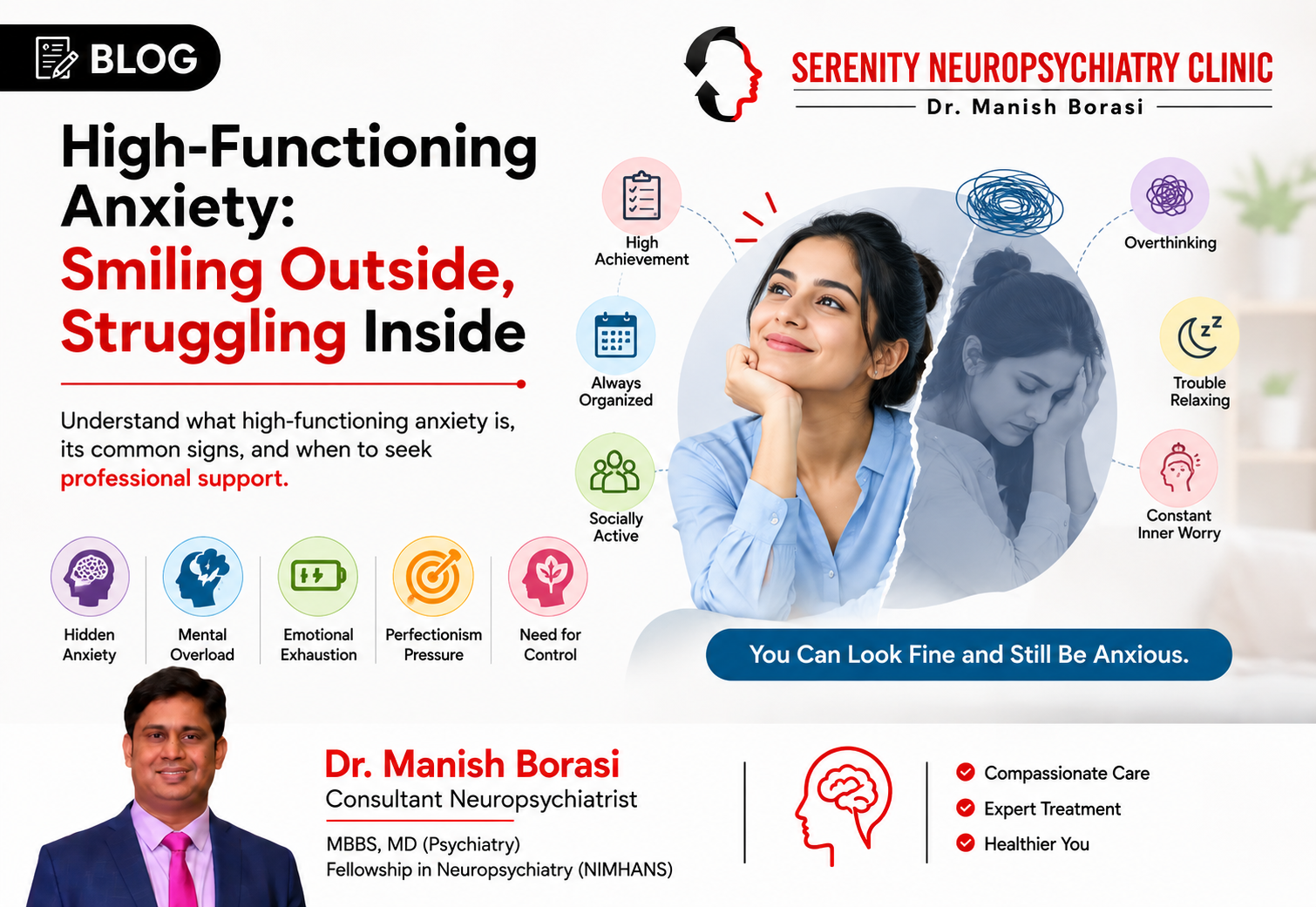
This experience is often described as high-functioning anxiety. Although the term is commonly used, high-functioning anxiety is not a separate formal psychiatric diagnosis. It describes a pattern in which someone experiences anxiety-related difficulties while continuing to manage many everyday responsibilities.
Anxiety can affect people differently. Some individuals experience visible fear or avoidance, while others continue performing their daily activities despite persistent worry, perfectionism and emotional tension.
People considering Anxiety Treatment in Bhopal should understand that outward productivity does not necessarily indicate good emotional health. Persistent worry, fear of making mistakes, difficulty sleeping and excessive self-criticism can gradually affect a person’s quality of life.
At Serenity Neuropsychiatry Clinic, Dr. Manish Borasi provides psychiatric consultation for individuals experiencing mental health concerns, including anxiety-related difficulties.
This article explains the meaning of high-functioning anxiety, its common symptoms, possible causes, effects on everyday life, diagnostic assessment and available treatment approaches.
High-functioning anxiety is a commonly used, non-clinical expression describing individuals who experience persistent anxiety symptoms while continuing to perform their everyday responsibilities.
These individuals may appear organised, dependable and productive. However, internally, they may experience excessive worry, fear of failure, emotional tension and difficulty controlling their thoughts.
For example, an employee may consistently meet professional targets but spend hours worrying about small mistakes. A student may achieve excellent academic results but constantly fear disappointing their family. Similarly, someone managing household responsibilities may feel uncomfortable taking breaks because they believe everything must be completed perfectly.
It is important to distinguish this experience from a recognised anxiety disorder. A mental health professional may assess whether the symptoms are associated with generalised anxiety disorder, social anxiety disorder or another condition.
Understanding the difference is important because the appropriate treatment depends on the individual’s symptoms and clinical assessment rather than the informal label alone.
Why Can High-Functioning Anxiety Go Unnoticed?
High-functioning anxiety may remain unnoticed because outward behaviour does not always reflect internal emotional experiences.
A person may continue attending meetings, completing assignments, caring for family members and participating in social activities. Since they do not visibly withdraw from their responsibilities, others may assume that everything is fine.
1. Productivity Can Hide Emotional Distress
Some individuals respond to anxiety by becoming extremely organised and productive. They may prepare excessively, repeatedly check their work and avoid taking breaks because they fear making mistakes.
Although these behaviours may help them complete tasks, they can also increase mental pressure and make ordinary responsibilities exhausting.
2. Perfectionism May Be Mistaken for Dedication
A person may believe that every task must be completed perfectly. They might spend excessive time reviewing emails, checking documents or preparing for conversations.
Their behaviour may appear responsible, but the underlying motivation can be fear of criticism, failure or rejection.
3. Difficulty Asking for Help
People who are usually considered dependable may feel uncomfortable discussing their emotional struggles.
They may worry that others will judge them, misunderstand them or consider them incapable. Consequently, they may hide their feelings and continue managing everything alone.
4. Anxiety Symptoms May Be Dismissed as Ordinary Stress
Occasional stress is a normal response to challenging situations. However, persistent and difficult-to-control worry that affects sleep, concentration or everyday functioning deserves attention.
Someone should not have to wait until everyday responsibilities become impossible before seeking professional support. A consultation with a qualified Psychiatrist in Bhopal can help clarify whether these experiences are associated with an anxiety disorder or another concern.

Common Signs and Symptoms of High-Functioning Anxiety
Anxiety can affect thoughts, emotions, physical health and behaviour. Symptoms differ from person to person, and experiencing an individual symptom does not automatically indicate an anxiety disorder.
Recognising recurring patterns can help individuals decide when to seek professional assessment. Understanding these signs is also an important part of knowing when to consider Anxiety Treatment in Bhopal.
1. Constant Overthinking
A person may repeatedly analyse conversations, decisions and everyday situations. Even after completing a task successfully, they may worry about what could have gone wrong.
Common thought patterns include:
- What if I make a mistake?
- What if someone misunderstands me?
- Did I say something inappropriate?
- What if the situation does not go as planned?
- Could I have done something better?
Persistent overthinking can make it difficult to concentrate on the present.
2. Fear of Making Mistakes
Some individuals feel uncomfortable with uncertainty. They may repeatedly check their work, seek reassurance or delay decisions because they are afraid of choosing incorrectly.
This fear can affect professional responsibilities, academic performance and personal decisions.
3. Difficulty Relaxing
Even during free time, a person may feel mentally occupied with pending tasks and possible problems.
They may find it difficult to enjoy holidays, hobbies or quiet moments without thinking about responsibilities.
4. Sleep Disturbances
Anxiety may interfere with the ability to fall asleep or stay asleep. Some people experience racing thoughts at bedtime, while others wake up feeling tense or worried.
Poor sleep can further affect concentration, mood and energy levels.
5. Physical Tension and Discomfort
Anxiety is not limited to thoughts and emotions. It may also involve physical symptoms such as:
- Muscle tension
- Headaches
- Stomach discomfort
- Sweating
- Trembling
- Restlessness
- Palpitations
- Fatigue
Physical symptoms can have several possible causes. A healthcare professional may recommend medical evaluation when appropriate.
6. Difficulty Saying No
A person may accept additional responsibilities even when already overwhelmed. They may fear disappointing others or being perceived as unhelpful.
Over time, this pattern can contribute to exhaustion and frustration.
7. Seeking Constant Reassurance
Some individuals repeatedly ask others whether they have made the right decision or completed a task correctly.
Reassurance may provide temporary relief, but the worry can return.
8. Feeling Mentally Exhausted
Maintaining a composed appearance while managing persistent worry can be tiring. A person may feel drained even after completing ordinary activities.
If these symptoms occur frequently or begin affecting everyday activities, consulting a qualified mental health professional can help clarify their underlying cause.
What Causes High-Functioning Anxiety? Common Risk Factors
There is no single explanation for why someone experiences persistent anxiety. Anxiety-related conditions can involve a combination of biological, psychological, environmental and social factors.
1. Genetic and Biological Factors
A family history of anxiety or other mental health conditions may contribute to a person’s vulnerability.
Differences in brain functioning and biological responses to stress may also play a role. However, having a family history does not mean someone will necessarily develop an anxiety disorder.
2. Long-Term Stress
Ongoing pressure related to employment, finances, education, family responsibilities or relationships may contribute to persistent worry.
When stressful situations continue without adequate recovery, a person may find it increasingly difficult to relax.
3. Childhood Experiences
Some people grow up in environments where they feel they must achieve high standards to receive approval or avoid criticism.
These experiences may contribute to perfectionism, fear of failure or a strong need to please others. However, childhood experiences do not affect everyone in the same way.
4. Perfectionism and High Expectations
Setting goals can be positive, but unrealistic expectations may create continuous pressure.
A person may feel that anything less than perfect performance represents failure. This can increase self-criticism and make even small responsibilities feel overwhelming.
5. Difficulty Managing Uncertainty
Some individuals feel particularly uncomfortable when outcomes are unpredictable.
They may try to control every detail, repeatedly plan for possible problems or avoid situations where they cannot guarantee success.
6. Lifestyle and Environmental Pressures
Irregular sleep, excessive workload, limited relaxation time and ongoing personal difficulties may worsen anxiety symptoms.
These factors do not independently establish a diagnosis, but they can be useful to discuss during a professional assessment with a Psychiatrist in Bhopal.
How Does High-Functioning Anxiety Affect Everyday Life?
High-functioning anxiety may remain hidden for a long time, but persistent worry can gradually affect different areas of life.
At the Workplace
An individual may consistently complete tasks but struggle with excessive self-criticism, fear of negative feedback and difficulty delegating responsibilities.
They may also find it difficult to switch off after work, leading to reduced opportunities for rest and recovery.
In Personal Relationships
A person may overanalyse messages, worry about disappointing loved ones or interpret ordinary disagreements as signs of rejection.
They may avoid expressing their needs because they fear creating conflict.
In Academic Life
Students may spend excessive time preparing for examinations, fear disappointing their families or feel unable to relax after completing assignments.
Even positive results may not provide lasting satisfaction if they immediately begin worrying about the next challenge.
In Physical Well-Being
Persistent anxiety may be associated with sleep difficulties, muscle tension, fatigue and other physical symptoms.
When these concerns continue, they may affect a person’s overall quality of life.
In Emotional Well-Being
A person may experience irritability, frustration, low mood or a feeling of never doing enough.
Professional assessment can help determine whether these experiences are associated with an anxiety disorder or another mental health concern.
High-Functioning Anxiety vs Ordinary Stress: What Is the Difference?
Stress and anxiety can share similar features, but they are not identical.
| Ordinary Stress | Persistent Anxiety Symptoms |
|---|
| Often linked to a specific situation | May involve several everyday concerns |
| Usually reduces when the stressor resolves | May continue even when circumstances improve |
| Can motivate short-term action | May interfere with concentration and relaxation |
| Often temporary | May become persistent or difficult to control |
| Usually manageable with recovery time | May require professional assessment and support |
These differences are general descriptions, not a diagnostic test. A qualified professional considers the person’s symptoms, history, duration and level of distress before reaching a conclusion.
You do not need to reach a breaking point before seeking help. Consider speaking with a mental health professional if:
- Worry feels difficult to control.
- You frequently overthink ordinary situations.
- Anxiety interferes with sleep or concentration.
- You feel tense even when nothing urgent is happening.
- You avoid activities because of fear or worry.
- You struggle to relax or enjoy time away from work.
- Physical symptoms occur repeatedly alongside emotional distress.
- Your relationships or everyday responsibilities are being affected.
Individuals looking for Anxiety Treatment in Saraswati Nagar, Bhopal can begin by discussing their symptoms and concerns with a qualified mental health professional. A psychiatrist can assess whether symptoms are related to an anxiety disorder or another medical or psychological concern.
A Psychiatrist for Anxiety Treatment in Bhopal can also help individuals understand persistent worry, physical discomfort and changes in everyday functioning through a clinical assessment.
If anxiety is accompanied by thoughts of self-harm, suicidal thoughts or an inability to remain safe, seek immediate professional or emergency assistance rather than waiting for a routine appointment.
There is no single test that confirms high-functioning anxiety as a separate diagnosis. Assessment focuses on understanding the person’s symptoms and identifying whether they meet the criteria for a recognised condition.
During a psychiatric consultation, Dr. Manish Borasi may discuss the person’s emotional experiences, sleep patterns, personal history and daily challenges.
A professional assessment may explore the following areas.
1. Symptoms and Their Duration
The professional may ask when the symptoms started, how frequently they occur and whether they have changed over time.
2. Emotional and Thought Patterns
Questions may explore excessive worry, fear of failure, perfectionism, irritability, restlessness and difficulty controlling thoughts.
3. Sleep and Physical Health
Sleep patterns, energy levels and physical symptoms may be discussed. Depending on the presentation, a medical evaluation may be recommended to rule out other causes.
4. Personal and Family History
Previous mental health concerns, family history, significant life events and current stressors may be relevant.
5. Impact on Daily Functioning
The professional may assess how symptoms affect work, education, relationships, social activities and the person’s ability to relax.
An assessment helps guide an appropriate care plan rather than relying only on outward signs of productivity or success. Individuals considering Anxiety Treatment in Bhopal should discuss their complete symptoms and history during the consultation.
Treatment depends on the person’s symptoms, diagnosis, preferences, medical history and level of distress.
There is no single approach that is suitable for everyone. A personalised plan may involve psychotherapy, medication when clinically appropriate, lifestyle changes or a combination of these approaches.
1. Cognitive Behavioural Therapy (CBT)
Cognitive behavioural therapy is a structured form of psychotherapy commonly used for anxiety disorders.
It helps individuals recognise connections between thoughts, feelings and behaviours. With professional guidance, a person can learn to identify unhelpful thinking patterns and develop more balanced responses.
CBT may help with:
- Identifying unrealistic fears and assumptions.
- Managing excessive worry.
- Reducing perfectionistic thinking.
- Developing healthier responses to uncertainty.
- Gradually changing avoidance behaviours.
- Building practical coping skills.
2. Medication When Clinically Appropriate
Medication may be considered depending on the diagnosis, severity of symptoms, medical history and individual needs.
Certain antidepressant medicines, including selective serotonin reuptake inhibitors (SSRIs) and serotonin-norepinephrine reuptake inhibitors (SNRIs), are commonly used for some anxiety disorders.
A psychiatrist can explain the potential benefits, possible side effects, interactions and expected time for improvement.
Medication should only be taken under medical supervision. Patients should not start, stop or change prescribed medication without consulting their treating doctor.
3. Stress Management Techniques
Stress management strategies can complement professional care. Depending on individual needs, these may include:
- Practising slow, comfortable breathing.
- Taking short breaks during demanding tasks.
- Maintaining a consistent daily routine.
- Setting realistic expectations.
- Spending time on enjoyable activities.
- Learning to recognise personal stress triggers.
4. Improving Sleep Habits
A regular sleep schedule and a comfortable sleeping environment may support better rest.
People who experience racing thoughts at bedtime may benefit from a calming routine, reduced screen use before sleep and limiting stimulating activities close to bedtime.
Persistent sleep problems should also be discussed with a healthcare professional.
5. Setting Healthy Boundaries
Learning to say no, delegate tasks and recognise personal limits can help reduce unnecessary pressure.
Small changes, such as avoiding excessive commitments and allowing time for rest, may support healthier daily routines.
6. Regular Follow-Up
Follow-up appointments allow the treating professional to review progress, discuss concerns and make adjustments when necessary.
The duration and frequency of treatment vary depending on the individual’s condition and response to care.
A psychiatrist is a medical doctor trained to assess, diagnose and manage mental health conditions.
A psychiatric consultation can help individuals understand symptoms that may otherwise be dismissed as ordinary stress or overthinking.
A Psychiatrist in Bhopal may help by:
- Understanding the symptoms: Discussing emotional, behavioural and physical concerns.
- Assessing possible conditions: Identifying whether symptoms are associated with an anxiety disorder or another concern.
- Explaining treatment options: Discussing suitable psychological and medical approaches.
- Reviewing progress: Monitoring changes in symptoms and everyday functioning.
- Providing continued guidance: Adjusting the care plan when clinically necessary.
For individuals seeking a Psychiatrist for Anxiety Treatment in Bhopal, it is useful to consult a qualified professional who takes time to understand their concerns and explains treatment options clearly.
At Serenity Neuropsychiatry Clinic, Dr. Manish Borasi provides psychiatric consultation for individuals experiencing mental health concerns. A professional assessment can help clarify symptoms and guide the next steps.
Practical Ways to Manage Anxiety in Everyday Life
Professional care can be supported by small, realistic changes in daily routines. These strategies are not a substitute for diagnosis or treatment, but they may help individuals develop healthier habits.
1. Recognise Your Triggers
Notice situations, thoughts or responsibilities that regularly increase worry. Writing them down may help identify recurring patterns.
2. Challenge Perfectionistic Expectations
Ask yourself whether a task genuinely needs to be perfect or whether completing it adequately is enough.
3. Break Large Tasks Into Smaller Steps
Dividing responsibilities into manageable actions may reduce the feeling of being overwhelmed.
4. Schedule Time for Rest
Rest should not be treated as a reward that must be earned after completing every responsibility. Regular breaks can support recovery.
5. Practise Mindful Attention
Try bringing your attention back to the present activity instead of repeatedly imagining possible future problems.
6. Maintain Social Connections
Talking to a trusted person can make it easier to express concerns rather than keeping every feeling hidden.
7. Seek Professional Guidance When Needed
Self-management strategies may be helpful, but persistent anxiety deserves appropriate assessment. Seeking help is a constructive step, not a sign of weakness.
Anxiety Treatment in Bhopal: Taking the First Step Towards Better Mental Well-Being
People experiencing persistent anxiety may continue to perform well at work, manage family responsibilities and appear confident in social situations. However, outward success does not always reflect emotional well-being.
Recognising the signs of anxiety is an important first step. If constant overthinking, fear of mistakes, sleep difficulties or emotional exhaustion are affecting everyday life, consider discussing these concerns with a qualified mental health professional.
Individuals looking for Anxiety Treatment in Saraswati Nagar, Bhopal should focus on finding qualified professional support and an assessment suited to their individual concerns.
At Serenity Neuropsychiatry Clinic, Dr. Manish Borasi can be approached for information about psychiatric consultation and anxiety-related concerns.
Remember, you do not have to wait until anxiety becomes overwhelming to take your mental health seriously. Asking for support is a positive step towards understanding your emotional needs and building healthier ways to manage everyday challenges.
Frequently Asked Questions About Anxiety Treatment in Bhopal
1. Where can I seek Anxiety Treatment in Bhopal?
You can begin by consulting a qualified mental health professional who can assess your symptoms, understand your concerns and recommend an appropriate treatment approach. Anxiety Treatment in Bhopal should be based on an individual clinical assessment to determine whether persistent worry is associated with a recognised anxiety disorder or another concern.
2. What treatment options are available for high-functioning anxiety?
Treatment may include psychotherapy, such as cognitive behavioural therapy, medication when clinically appropriate, stress management strategies and regular follow-up. The recommended approach depends on the individual’s symptoms, diagnosis and medical history.
3. How can I find Anxiety Treatment in Saraswati Nagar, Bhopal?
Look for a qualified mental health professional who provides psychiatric assessment and can explain available treatment options. Serenity Neuropsychiatry Clinic is located in Saraswati Nagar, Jawahar Chowk, Bhopal. Confirm current consultation details directly with the clinic before visiting.
A Psychiatrist for Anxiety Treatment in Bhopal can assess persistent worry, identify possible underlying conditions and discuss suitable treatment options based on the individual’s symptoms and medical history. Depending on the assessment, treatment may involve medication, psychotherapy or a combination of approaches.
Not everyone experiencing anxiety requires medication. Depending on the diagnosis and severity, treatment may involve psychotherapy, medication or a combination of approaches. A qualified psychiatrist can explain the potential benefits and risks before recommending medication.
6. Can cognitive behavioural therapy help with high-functioning anxiety?
CBT can help people identify unhelpful thought patterns, manage excessive worry and develop healthier responses to situations that trigger anxiety. It is a commonly recommended psychological treatment for several anxiety disorders.
Consider professional support when persistent worry, sleep problems, emotional exhaustion or physical tension begin affecting your daily life. Anxiety Treatment in Saraswati Nagar, Bhopal may begin with an assessment to understand the underlying concerns and appropriate treatment options.
8. How long does anxiety treatment usually take?
Treatment duration varies. It depends on the nature of the symptoms, the individual’s needs and response to treatment. Some people may benefit from a structured course of therapy, while others may require longer-term management and follow-up.
9. What should I expect during a consultation with a Psychiatrist in Bhopal?
A consultation with a Psychiatrist in Bhopal may involve discussing your symptoms, personal and medical history, sleep, stressors and the effect of anxiety on daily functioning. The psychiatrist may then explain possible diagnoses and appropriate next steps.
10. Can professional Anxiety Treatment in Bhopal improve everyday functioning?
Appropriate Anxiety Treatment in Bhopal can help many people manage anxiety symptoms, develop coping skills and improve everyday functioning. Individual outcomes vary, and progress depends on the underlying condition and response to care.
Conclusion
High-functioning anxiety can be difficult to recognise because individuals may continue managing their professional, personal and social responsibilities while experiencing persistent worry, overthinking and emotional exhaustion. However, maintaining productivity does not mean that emotional difficulties should be ignored.
Recognising symptoms such as fear of failure, perfectionism, sleep disturbances, constant reassurance-seeking and difficulty relaxing can help individuals understand when professional support may be needed. With appropriate psychiatric assessment, treatment options such as psychotherapy, medication when clinically appropriate and healthy lifestyle changes can help manage anxiety symptoms.
If persistent anxiety is affecting your everyday life, consider seeking Anxiety Treatment in Bhopal from a qualified mental health professional. At Serenity Neuropsychiatry Clinic, Dr. Manish Borasi provides psychiatric consultation to help individuals understand their concerns and explore suitable care options.
Remember, asking for help is not a weakness. Taking care of your mental health is an important step towards a healthier and more balanced life.